

kq about --no-gloss

cold
read.

The whole business rests on one habit. After a translator finishes your strings, a second native speaker reads them with the English turned face down. If a sentence sounds like it started life somewhere else, it goes back. That’s slower than skipping it. It’s also the only honest reason to hire us instead of a machine.

ask for a fixed quote

or call (845) 494-1180
weekdays until 7pm

A reviewer’s hands marking a printed page of Spanish interface strings, the English source sheet turned face down beside it
english: face down until the read is done.

02 the name

a seaweed and a pen. people ask, so here’s the answer.

It isn’t a founding myth. It’s a working description of the two halves of the job, and of which half wins when they disagree.

kelp

/kɛlp/ noun
  1. A large brown seaweed that grows faster than nearly anything else in the sea.
  2. At this desk: the half of the job that keeps up with your release train — your file formats as-is, diffs against last sprint, staging builds, seven business days per base package.

“The kelp side had the pt-BR diff back before lunch.”
quill

/kwɪl/ noun
  1. A pen cut from a flight feather. Has to be dipped every few words; impossible to rush.
  2. At this desk: the half that won’t hurry — the cold read, the tú-or-usted call, the ten-minute argument over whether “dashboard” gets translated at all.

“The quill side sent line 14 back. Again.”

most shops pick one. when the two collide here, the quill wins — and you hear about it the same day.

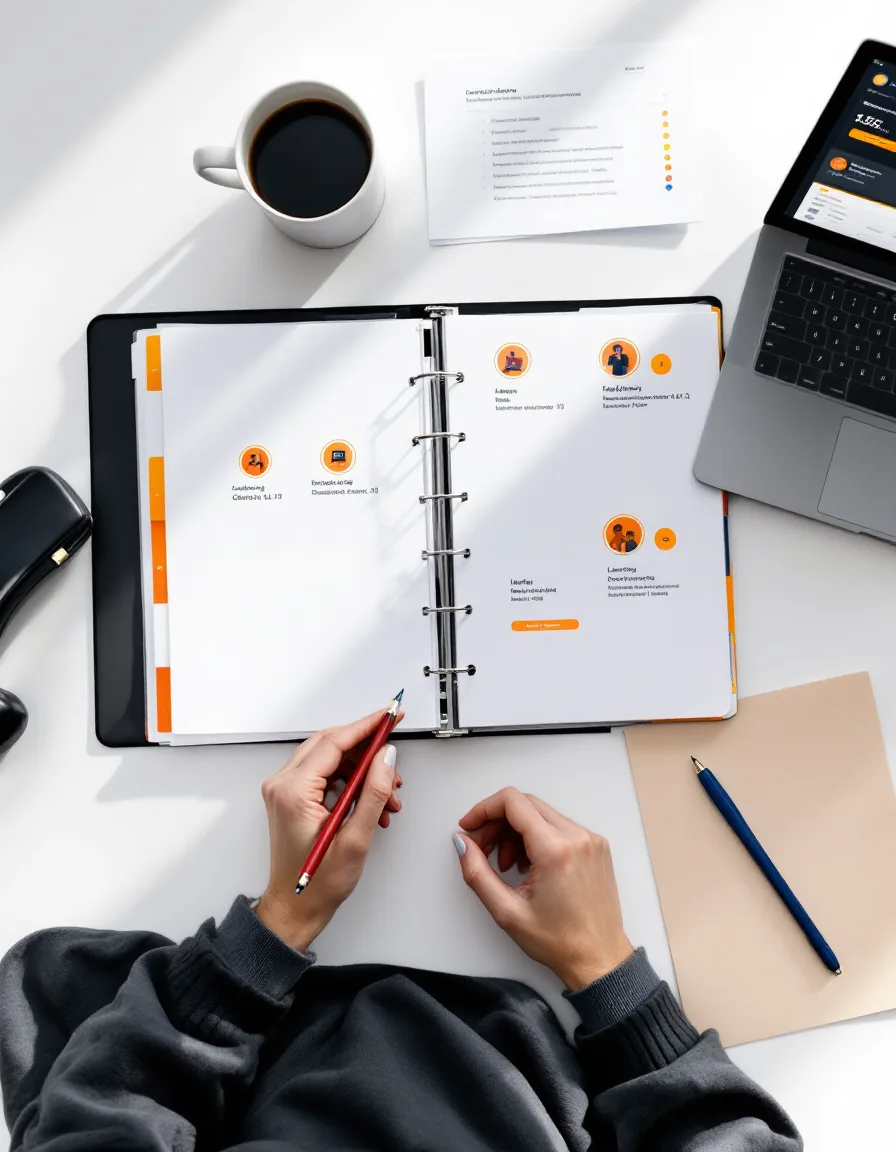
Overhead view of a translator’s desk: tabbed glossary binder, pencil-marked screenshots, a laptop on a staging build, two pens and a desk phone
fig. 03 · 88 Forshay Road · an ordinary weekday

03 the desk

what’s actually on the desk.

Localization sounds like software. Most of the parts that matter are paper, pencil and a phone. Here’s the inventory, and why each thing earns its spot.

  • 01

    a glossary binder, printed

    Every term we’ve settled for your product, with the reason written next to it. Printed, because a spreadsheet gets scrolled past and a binder gets opened.

  • 02

    screenshots, counts in pencil

    “Configuración” is 13 characters. If your button holds 10, we’d rather circle it here than have your designer find it during QA the week of launch.

  • 03

    the english, face down

    The cold reader’s copy of the source stays turned over until the read is finished. It’s the lowest-tech step in the process and the one we’d never drop.

  • 04

    two pens

    Red means wrong. Blue means correct but sounds translated — which, in a SaaS onboarding flow, is often the problem that costs you more.

  • 05

    a staging login

    Kept in a password manager, not on a sticky note. Strings get judged on the screen where they live, at the real width, next to the real icon.

  • 06

    a phone that rings here

    (845) 494-1180 rings in Monsey. Whoever answers has read your files, or is sitting beside the person who has.

04 paper trail

one string, seven days, every hand that touched it.

A log like this ships with every delivery. Partly so you can see the work. Mostly so whoever translates your next release — us or somebody else — knows why “workspace” stayed in English.

$ kq log --follow welcome.titlees-419 · pt-BR
  1. a3f9e1cyou

    add welcome.title: “Let’s get you set up”

    day 0
  2. 7c21d04translator

    signed up for the product, clicked through onboarding, noted the tone before opening en.json

    day 1
  3. e08b6a2translator

    es-419 draft: “Vamos a dejar todo listo” — tú, per the style sheet you signed off

    day 2
  4. 91d4f3bcold reader

    line 12 reads fine. line 14 sounds translated — nobody says it that way. sent back with a note.

    day 4
  5. 5be7a90translator

    rewrote line 14. glossary: “workspace” stays in English for pt-BR — your users already say it

    day 4
  6. c62f018qa

    checked in staging at real width: 6 strings over limit, shorter options attached for each

    day 6
  7. 0d3e7aadesk

    delivered es-419.json, overflow report, glossary v1. invoice: one per language.

    day 7

Real format, illustrative string. Your actual log lists every string we touched — the boring ones too.

05 house rules

taped above the desk, so nobody gets clever.

Six rules. A few of them cost us work. We keep them because every shortcut on this list is one we’ve been tempted by on a Thursday afternoon.

  1. rule 01

    the cold reader never sees the english.

    With the source in view, a reviewer reads what a sentence meant. Without it, they read what it says — the way your customer will, someone who has never seen the English and never will.

    costs us: an extra reader on every job
  2. rule 02

    the date moves before a bad string ships.

    If the second read turns up problems on day six, you hear from us on day six — with a new date and the reason. Not on day seven, with a file we’d rather you didn’t open.

    costs us: an awkward email, occasionally
  3. rule 03

    machine drafts get disclosed.

    For repetitive interface strings we sometimes start from a machine draft. When we do, the invoice says so. You’re paying for the rewrite and the read, and you should know which is which.

    costs us: the chance to pretend
  4. rule 04

    no fourth language without two natives.

    French would sell. German would sell. Neither goes on the menu until we can staff a translator and a separate reader for it — not one person checking their own work and calling it QA.

    costs us: every french enquiry
  5. rule 05

    your glossary leaves with you.

    CSV or TBX, your pick, no export fee. If you move to another vendor, they start from our decisions instead of from zero. Better for you, and frankly kinder to the next translator.

    costs us: the easy kind of lock-in
  6. rule 06

    our mistakes aren’t line items.

    Within 30 days of delivery, if the error is ours, the fix is free. If it’s new copy from your side, we quote it at the per-word rate — and we’ll tell you plainly which one it is.

    costs us: whatever we got wrong
KICKOFF.md30 min

bring these to the call

  • Your source files in whatever format the repo already uses — .json .po .xliff are all fine. Don’t convert anything for us.
  • A staging login, or a folder of screenshots if staging isn’t ready.
  • Whoever wrote the English. Half an hour with them prevents more errors than any tool we own.
  • A launch date — and an honest word on how firm it really is.
  • Optional: a competitor whose Spanish or Japanese you think sounds right. Useful for tone; we won’t copy it.

06 the kickoff

thirty minutes on a call, then a fixed quote.

We don’t mail a rate card and wait. We get on a call with whoever wrote your English, ask the dull questions — who the customer is, tú or usted, whether “workspace” gets translated — and send a fixed price per language within one business day.

If we’re the wrong fit, you’ll hear that on the call too. Almost nobody visits 88 Forshay Road, and that’s fine: the files travel, and the call runs on whatever video tool you already use.

(845) 494-1180 · weekdays 8:30am–7pm · info@kelpquilllabs.com